Quick Summary
Private sale homes in Noosa are spread across property portals, local social media groups and word of mouth, so buyers should search all three. Set saved alerts on portals using terms like “private sale” and “by owner”, and check community groups weekly. Confirm the seller’s identity against the title, and have a solicitor review the contract before signing.
- Set saved alerts on portals using terms like “private sale” and “by owner”.
- Check community Facebook groups and local noticeboards, since many posts never reach portals.
- Track the date each listing first appeared, as long-listed homes may open to lower offers.
- Confirm the seller’s identity against a current title search from the Queensland Titles Registry.
- Have a solicitor or conveyancer review the contract, and order a building and pest inspection before committing.
Table of Contents
- Where Private Sale Homes Are Listed in Noosa
- Finding Noosa Homes for Sale by Owner
- Approaching Owners and Sourcing Noosa Off-Market Properties
- Due Diligence Steps Before You Commit to a Private Sale
- Your Next Step: Shortlisting Private Sales in Noosa
- Frequently Asked Questions
Where Private Sale Homes Are Listed in Noosa
Last Updated: November 7, 2026
Private sale homes in Noosa rarely appear in one place. Most owners who sell without an agent list across a mix of property portals, social channels and word of mouth. Knowing where to look is the first step to finding them. Buyers can miss good opportunities if they only check one source.
Start by searching for private sale homes on the major property portals, then widen your net to community channels. Each source reaches a different group of sellers.
Property portals and owner-sold listings
Many owners list their home privately on portals such as Domain property listings and realestate.com.au property search. Many of these sites let you filter by “private sale” or “by owner”. Set up saved searches so you get alerts when a new listing matches your criteria.
A common mistake is filtering too tightly. Owners often describe their property in unusual ways, so check for terms like “owner sale”, “no agent” and “direct sale”. Browse the surrounding suburbs too, since a private sale in Noosa Heads may sit close to Noosaville or Sunrise Beach.
Local social media and community channels
Owners who sell without an agent often post first in local groups. Check community Facebook groups, neighbourhood pages and local noticeboards regularly. Many of these posts never reach the portals at all.
Watch for these signs of a genuine listing:
- The seller posts photos and a clear asking price
- The post includes a phone number or email for direct contact
- The seller answers questions quickly and openly
- The property details match what you find on public records
Finding Noosa Homes for Sale by Owner
Finding Noosa homes for sale by owner takes more effort than a standard portal search. You need to combine listing searches with direct checks. Most buyers succeed by setting a routine and sticking to it.
Set aside a fixed time each week to review new private listings. Consistency matters more than a single long search session.
A simple weekly routine:
- Check portal alerts for new private sale listings
- Scan local community groups for fresh posts
- Note any property that fits your budget and needs
- Record the date each listing first appeared
Tracking dates helps you spot motivated sellers. A home that has been listed for several weeks may open to a lower offer. Owners who sell privately often respond well to a clear, well-prepared approach from a serious buyer.
Use the Queensland Government property information resources to understand how property titles and ownership are recorded before you contact an owner.
For more on how buyers gain access to homes before they are widely advertised, read our guide to Off Market Property Sunshine Coast How Buyers Get First Access.
Approaching Owners and Sourcing Noosa Off-Market Properties
Approaching an owner directly can open doors that never reach the public market. Many owners sell quietly to a buyer who shows genuine interest and respect for their time. Sourcing off-market properties depends on research, timing and a polite, clear first contact, and on verifying who you are actually dealing with before money or personal details change hands.
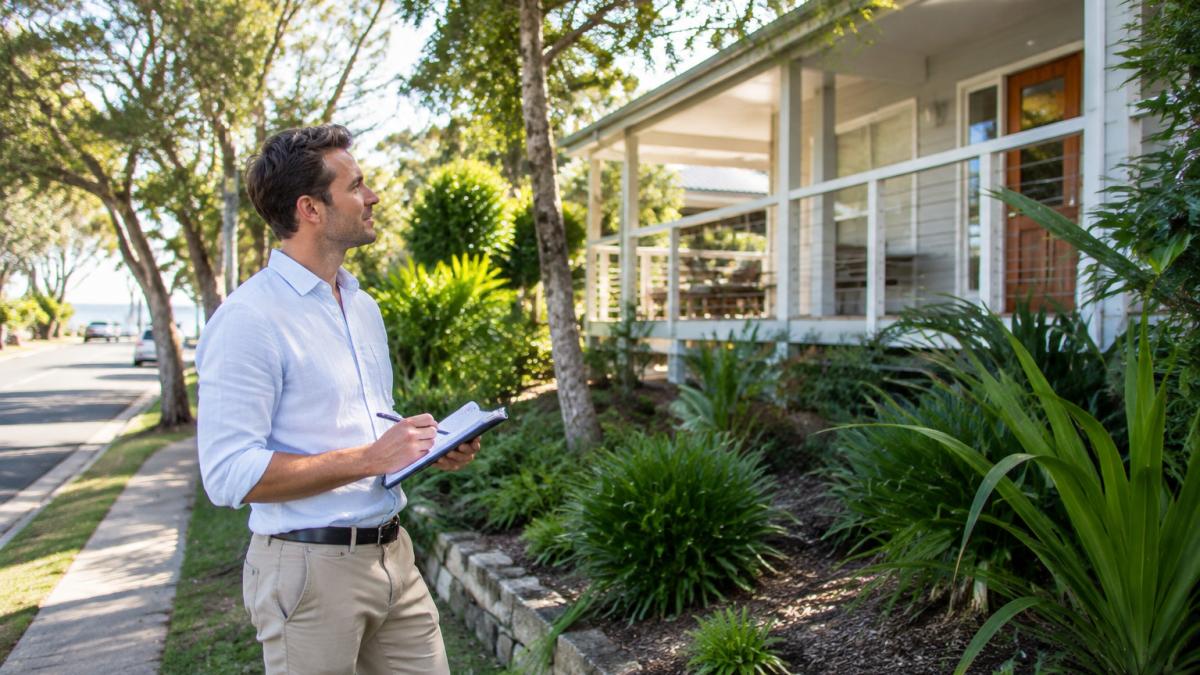
!A buyer in smart-casual clothing standing outside a coastal timber home in Noosa, holding a notepad, with a tree-lined street behind
Start with public records. Use the Queensland Titles Registry to confirm the registered owner of a property, and cross-check the address against council rates and planning records. Mapping tools and recent sales evidence help you shortlist streets and property types before you make contact.
When you write or call, keep it short and specific. State that you are a genuine buyer, name the property, and ask whether the owner is open to a direct conversation. Avoid making an offer in the first contact.
Before you progress, verify the listing and the seller:
- Confirm the seller’s identity matches the title search
- Ask for the property description and lot-on-plan and check it against public records
- Request proof of ownership or rates notices if the seller is not the registered owner
- Be cautious of any request to pay a holding deposit or transfer funds before a contract is prepared
- Meet in person or by video, and keep a written record of what is agreed
- Never send identity documents or bank details to an unverified contact
Watch out: be cautious of a seller who refuses an in-person inspection or asks for a deposit to be paid before any contract is signed. A genuine private seller will expect you to inspect the property and will accept a contract prepared by a solicitor or conveyancer.
For first-timers, Off-Market Land: How to Find and Buy It as a First-Timer explains how public records and mapping tools help you locate owners to approach. Working with a Buyers Agent Mountain Creek: Finding Homes Before They List can also help you reach owners before a property is advertised.
Due Diligence Steps Before You Commit to a Private Sale
A private sale has fewer built-in safeguards than an agent-led sale. You carry more of the checking yourself, and in Queensland the contract itself is where most of the risk sits. Careful due diligence protects you from costly surprises and gives you a clear point to walk away.
Start with the contract. The Queensland Government property and buying guidance explains the general rules that apply to residential transactions, including disclosure and cooling-off rights for residential property.
A common pattern among buyers who get into trouble is treating a private sale as a handshake deal. It is not.
Use this checklist before you commit:
- Confirm the seller’s identity against a current title search from the Queensland Titles Registry
- Check the title for mortgages, caveats, easements and other encumbrances
- Confirm the property description and lot-on-plan match what you inspected
- Order a building and pest inspection and read the full report, not just the summary
- Review council rates, zoning and planning records with the local council
- Confirm the price, deposit, settlement date and any special conditions in writing
- Check whether the contract is subject to finance and building and pest, and note the expiry dates
- Ask for the seller’s disclosure documents, including any known defects or unapproved works
Many buyers overlook the cost of a building and pest inspection. Skipping it to save money often costs far more later, particularly on older coastal homes where salt, moisture and previous renovations can hide problems.
Watch out: a seller who pressures you to waive the cooling-off period, pay a deposit directly to them before a contract is in place, or sign without a solicitor review is showing the classic warning signs of a private sale that has not been properly set up.
For a full checklist, see Property Due Diligence Australia: What Every Buyer Must Check. Our guide to Buying at Auction on the Sunshine Coast: What to Check Before You Bid also covers the commitment risks that apply to any binding sale.
The checklist below summarises the checks the article recommends before you sign anything with a private seller.
| Check | What to do | Why it matters |
|---|---|---|
| Seller identity | Match against a current title search | Confirms who you are dealing with |
| Title encumbrances | Check for mortgages, caveats and easements | Reveals claims on the property |
| Property description | Match lot-on-plan to what you inspected | Avoids buying the wrong land |
| Building and pest | Order inspection and read the full report | Uncovers hidden defects |
| Council records | Review rates, zoning and planning | Confirms legal use and charges |
| Contract terms | Confirm price, deposit, settlement and conditions in writing | Sets binding obligations |
| Finance and inspection | Note expiry dates for subject-to conditions | Preserves your ability to walk away |
| Disclosure | Request known defects and unapproved works | Reduces surprises after settlement |
Your Next Step: Shortlisting Private Sales in Noosa
Shortlisting works best when you rank each property against your needs. Score each home on location, condition, price and how quickly the owner responds. Keep only the strongest options and check each one in person.
Once you have a shortlist, arrange inspections and complete your due diligence. Elevate Buyers Agents can help you assess private sales and negotiate on your behalf. Get started with Elevate Buyers Agents today to take the next step with confidence.
Frequently Asked Questions
How do I find homes for sale by owner in Noosa?
Start with owner-sold listings on the major property portals, which many private sellers use alongside agents, then check local community groups and social media where owners post directly. Set saved searches for Noosa suburbs and price ranges so new private listings reach you quickly. Keep your search broad at first, since private sellers often describe their homes without the usual agency wording, and note any listing that says ‘owner’, ‘private sale’ or lists a direct contact number rather than an agency.
Are private sale homes listed on the major property portals?
Some are, but not all. Many owners list on the big portals because buyers search there, while others rely on signboards, word of mouth or local online groups. The portals are a sensible first check, but a private sale may not appear there at all. This is one reason a targeted search across several channels, including direct approaches to owners of homes you like, gives you a fuller picture of what is available in Noosa.
What should I check before buying a privately sold home?
Confirm the owner’s identity against the title search, which you can order through the Queensland land registry, and check for registered mortgages, caveats and easements. Ask for the contract of sale and any disclosure documents early, and arrange a building and pest inspection before you sign. Because there is no agent managing the process, consider engaging a licensed conveyancer or solicitor to review the contract.
How do I make an offer on a private sale property?
Make your offer in writing and state the price, deposit, settlement date and any conditions, such as finance approval or a satisfactory building and pest inspection. Put the offer through your conveyancer or solicitor so the terms are clear and the contract is drafted correctly. Expect negotiation, and be prepared to walk away if the owner will not accept reasonable conditions. A clear, well-documented offer usually carries more weight with a private seller than a verbal one.