- Why a US Rate Decision Affects Australian Borrowers
- What This Means for Fixed vs Variable Rate Decisions
- The Conservative Finance Buffer Principle
- How a Buyer’s Agent Factors Financing Risk Into Acquisition Strategy
- Frequently Asked Questions
- Does the US Federal Reserve’s rate decision directly affect my Australian mortgage?
- What is the current RBA cash rate and where are Australian bond yields?
- Should I fix my mortgage rate now given the current environment?
- How does a Buyer’s Agent help when interest rates are high?
- Is now a bad time to buy property on the Sunshine Coast?
- What is an off-market property and why does it matter in this environment?
- How do I get started with a Buyer’s Agent on the Sunshine Coast?
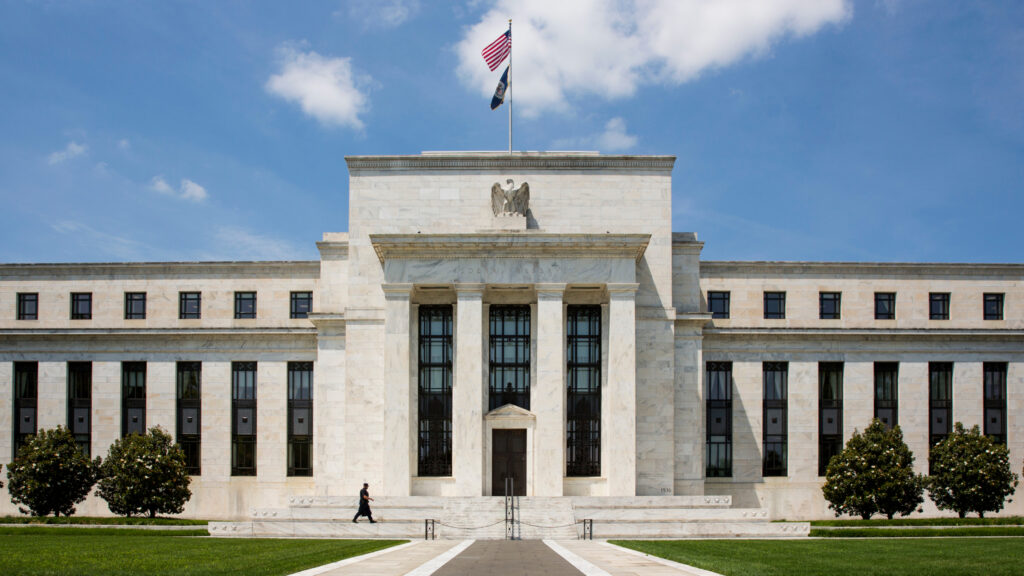
On 16 September 2026, the US Federal Reserve unanimously raised its policy rate by 0.25 percentage points to 3.75%–4% — its first increase since 2023. For Sunshine Coast property buyers, the ripple effects on global borrowing costs are worth paying close attention to. The RBA sets Australia’s cash rate independently, but the two systems are more connected than many buyers realise. Understanding that connection can mean the difference between a well-timed acquisition and a costly miscalculation.
Why a US Rate Decision Affects Australian Borrowers
The Fed doesn’t set Australian mortgage rates. But the mechanism linking them is worth understanding before you dismiss the news.
Australian banks don’t fund all their lending from domestic deposits. A significant portion comes from international wholesale debt markets, where borrowing costs are tied to global bond yields. When the US raises rates, it typically pushes US Treasury yields higher — and other sovereign bond markets, including Australia’s, tend to follow.
Australian 10-year government bond yields are already near 5.2%, levels not seen in over 15 years. The RBA cash rate sits at 4.35% as of August 2026. Commentary from major financial institutions has pointed not toward imminent relief, but toward continued pressure if inflation stays stubborn. The Fed’s move — and its signal that another increase is possible before year-end — adds weight to that outlook. (Federal Reserve statement, 16 September 2026; ABC Markets, 17 September 2026.)
The practical outcome for borrowers: fixed-rate mortgage pricing from Australian lenders reflects these wholesale funding costs. When international bond yields rise, fixed rates often follow — sometimes before the RBA moves at all.
What This Means for Fixed vs Variable Rate Decisions
This is the question most buyers in the $800,000 to $2 million range are asking right now, and there’s no clean universal answer.
Variable rates track the RBA cash rate. If the RBA holds or eventually cuts, variable borrowers benefit. But the current environment — elevated global yields, a Fed that just tightened, and an RBA showing no urgency to ease — doesn’t support the assumption that cuts are imminent.
Fixed rates offer certainty, but that certainty comes at a price already reflecting elevated bond markets. Locking in now means paying a premium for predictability in an environment where the rate relief many buyers were anticipating in late 2025 simply hasn’t arrived.
The prudent approach is to model your borrowing capacity and repayment obligations at rates meaningfully higher than today’s — not lower. If you’re purchasing in Buderim, Mooloolaba, or Peregian Springs at current price levels, stress-testing your position at 5.5%–6% isn’t pessimism. It’s responsible planning.
The Conservative Finance Buffer Principle
Buying property in a high-rate environment requires a different mindset than buying in a falling-rate cycle. The risk of over-extending is asymmetric: if rates fall, you benefit. If they rise further — or stay elevated longer than expected — the consequences are serious.
For buyers across the Sunshine Coast and Noosa markets, a conservative finance buffer means several things in practice.
- Borrowing capacity: Use a lender’s assessed capacity as a ceiling, not a target. The gap between what a bank will lend and what you should borrow is wider when rates are high.
- Cash reserves: Maintain liquidity well beyond your deposit and purchase costs. Rates staying elevated for 12–24 months longer than forecast is a realistic scenario, not a tail risk.
- Rental yield as a buffer for investors: For investment purchases in suburbs like Maroochydore or Coolum Beach, rental yield — the annual rental income expressed as a percentage of the property’s value — matters more when debt is expensive. A property returning 4.5% gross in a 4.35% cash rate environment looks very different from one returning 3% in the same conditions.
- Development and renovation exposure: If your acquisition involves a development component, construction finance costs are directly exposed to the rate environment. Budget conservatively and build in contingency for cost escalation.
How a Buyer’s Agent Factors Financing Risk Into Acquisition Strategy
A Buyer’s Agent works exclusively for you — not the vendor, not the selling agent. That distinction becomes especially important when financing conditions are tight and the cost of a misjudged acquisition is higher than it would be in a low-rate environment.
At Elevate Buyers Agents, financing risk is treated as a core variable in acquisition strategy, not an afterthought. With over 25 years of valuation expertise across the Sunshine Coast and Noosa regions, the team assesses properties against current and plausible future rate scenarios — not just today’s conditions.
Negotiation timing matters here too. In a market where buyers are recalibrating their borrowing capacity in response to global rate signals, vendor expectations can lag behind reality. A well-timed offer, backed by thorough independent valuation, can secure a meaningfully better outcome than moving at peak competition.
Access to off-market properties — those not publicly listed on standard real estate portals — also becomes more valuable in a high-rate environment. Competition is lower, negotiating room is wider, and due diligence is less rushed. These are the conditions where a Buyer’s Agent’s network and process add the most measurable value.
The end-to-end service model — from initial strategy through to settlement — means financing risk is considered at every stage: property selection, valuation, negotiation, and timing. That kind of integrated thinking matters when global markets are unsettled.
If you’re planning a purchase on the Sunshine Coast in the next three to six months, now is the right time to get that strategy in place. You can book a consultation at Elevate Buyers Agents.
Frequently Asked Questions
Does the US Federal Reserve’s rate decision directly affect my Australian mortgage?
Not directly. The RBA sets Australia’s cash rate independently. However, Australian banks fund part of their lending through international wholesale markets, where rates are influenced by US Federal Reserve decisions and global bond yields. When those yields rise, Australian fixed-rate mortgage pricing often follows — even before the RBA moves.
What is the current RBA cash rate and where are Australian bond yields?
As of August 2026, the RBA cash rate is 4.35%. Australian 10-year government bond yields are near 5.2%, the highest level in over 15 years. The Fed’s rate increase to 3.75%–4% on 16 September 2026 adds further upward pressure to global bond markets.
Should I fix my mortgage rate now given the current environment?
That depends on your individual circumstances, risk tolerance, and loan structure. Fixed rates already reflect elevated bond market conditions, so you’re paying for certainty that’s already priced in. Variable rates leave you exposed to further RBA moves. The most important step — regardless of which structure you choose — is stress-testing your repayments at higher rates before you commit.
How does a Buyer’s Agent help when interest rates are high?
A Buyer’s Agent factors financing conditions into acquisition strategy from the outset. That means assessing properties against realistic rate scenarios, identifying off-market opportunities where competition and pricing pressure are lower, and timing negotiations to align with market conditions. The goal is to protect your position when borrowing costs are elevated — not just find a property.
Is now a bad time to buy property on the Sunshine Coast?
Not necessarily. The right purchase at the right price, with a conservative finance buffer, can still make sense in a high-rate environment. What changes is the margin for error. Overpaying or over-extending on debt is more costly when rates are high and staying high — which is precisely why independent valuation expertise and strategic acquisition advice matter more, not less.
What is an off-market property and why does it matter in this environment?
An off-market property is one not publicly listed on standard real estate portals. Buyers access them through agent networks and relationships. In a high-rate environment, off-market opportunities typically attract less competition, giving buyers more room to negotiate on price and conditions — both of which matter significantly when every dollar of purchase price translates directly into higher debt servicing costs.
How do I get started with a Buyer’s Agent on the Sunshine Coast?
The first step is a strategy consultation to clarify your goals, budget, and risk parameters. Elevate Buyers Agents works across the Sunshine Coast and Noosa regions, handling the full process from property search through to settlement. Visit elevatebuyersagents.com.au to book a consultation.